Short drink and long drink are terms commonly used in bars, yet their definitions and differences have received little attention in the history of cocktails. Short drink vs. long drink: here is their historical definition, how they differ, and how much they hold.
The Definition and Difference Between a Short Drink and a Long Drink
Many people claim that the difference between a short drink and a long drink comes down to volume. In truth, history tells a slightly different story. That definition is a little too simplistic. And it gives me an opportunity, as a cocktail historian, to finally offer a serious answer to this question.
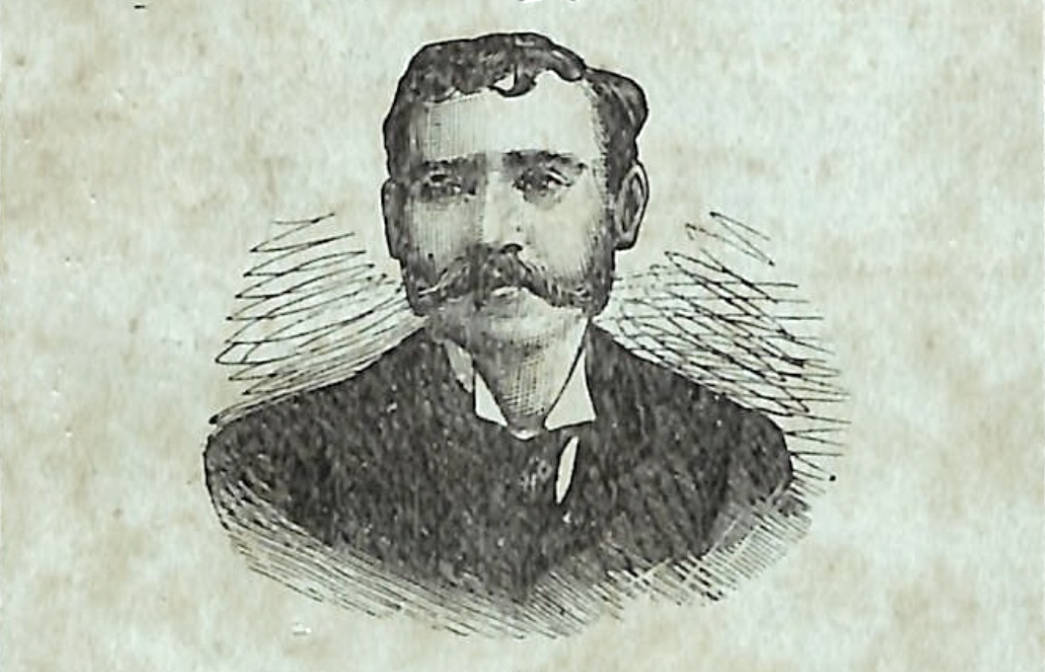
As far back as my research has taken me, it was in 1884 that short drinks and long drinks were first defined and classified, at least to some extent, in a cocktail book. The book was titled American and Other Drinks and was written by Charlie Paul, a bartender who had worked in New York, Paris, and at the Royal Aquarium in London.
In the preface, he offered a somewhat vague but valuable definition of these terms:
- “...All these are ‘short’ drinks—that is to say, drams.”
- “...In the list of ‘long’ drinks which may be imbibed with deliberation and through the medium of a couple of straws may be mentioned...”
Then, just before the list of short drinks, he wrote:
- “In making all kinds of ‘short drinks’, take a half pint tumbler, in which put the different ingredients as directed below; then strain off into an ordinary pony tumbler”
Upon a close study of Charlie Paul’s book, his definition of a "short drink" or a "long drink" was simple:
- A short drink was a "dram": a small serving of alcohol, served without ice and drunk directly from the glass.
- Once a cocktail was served with ice—or, in any case, in a larger glass from which it could potentially be sipped through a straw—Charlie Paul considered it a long drink. This was true even if its capacity was no greater than that of a short drink. For example, Charlie Paul classified smashes, juleps, and cobblers as long drinks.
In the decades that followed, no author attempted a complete short drink/long drink classification covering every cocktail, although in 1891 Mrs. De Salis categorized a few of them in her book Drinks À La Mode.
From a historical standpoint, then, Charlie Paul was the author who put a definition of the short drink and the long drink—and the difference between them—into print in 1884. I will not dispute that historical record. That is how history recorded it, whether we like it or not.
The Volume of a Short Drink
Short drinks vary considerably, particularly in their alcohol content. No single volume can therefore be applied universally to every short drink. Imagine a short drink made with absinthe and green Chartreuse: it might contain no more than 60 ml (2 oz). A cocktail from the flip family, on the other hand, can exceed 90 ml (3 oz), because the egg alone accounts for nearly half the drink.
The fact is that short drinks will never all have the same volume. As far as I am concerned, the only rule I can accept for short drinks is that they should always contain less than 120 ml (4 oz).
The Volume of a Long Drink
To determine the volume of a long drink, I first looked at what cocktail history had to say. Historical cocktail books generally followed a theoretical principle: the spirit or spirits in a cocktail amounted to one jigger. The problem is that the quantity represented by a jigger varied from one book to another. Sometimes it meant 1½ ounces, sometimes 2 ounces, and one book even specified 1¾ ounces.
Since the historical record is unclear, I developed my own theory about the volume of a long drink. I like simplicity, and I like things to follow a clear structure.
My first rule is that the spirit base of a long drink should be 50 ml. There are several reasons for this: ease of measuring, keeping a cocktail competitively priced for the professional, providing the customer with a reasonable pour that is neither too stingy nor too generous, and public health considerations. For these reasons, 50 ml strikes me as a sensible amount that remains consistent with the historical record. It falls between 1½ and 2 ounces, the quantities that historically corresponded to one jigger.
So, if the spirit base of a cocktail generally accounts for one-third of its total volume, a 50 ml spirit base gives us a total long drink volume of 150 ml (5 oz). This is the general rule I use for most long drinks: they contain 150 ml (5 oz). By “most,” I mean standard spirit-based long drinks lengthened with nonalcoholic beverages.
However, not all long drinks are necessarily lengthened with nonalcoholic beverages, so I have a second rule: cocktails built on a spirit base and lengthened with light wine or cider should be limited to 120 ml (4 oz). That is more than sufficient; otherwise, the drink can become too intoxicating.
There are, of course, exceptions to these rules. I am thinking in particular of cocktails in the Collins family, whose volume has historically been greater than that of fizzes. See my article Gin Fizz vs Tom Collins vs John Collins: The Real Difference.
The only difficulty I encountered was adapting my metric measurements to US fluid ounces. Since a 50 ml spirit base does not translate neatly into a practical US fluid ounce measurement, I use 4.5 US fl oz as the total volume for a long drink when working with the US customary system. In that system, the spirit base will generally be 1.5 US fl oz.
Here, then, is my general rule for the volume of a long drink:
- Long drink containing spirits and lengthened with nonalcoholic beverages: 150 ml
- Long drink containing spirits and lengthened with light wine or cider: 120 ml
- Long drink made exclusively with a light wine or cider: 150 ml
Once again, there are a few exceptions, including Collins cocktails, cocktails served in beer glasses, nonalcoholic cocktails...